• Product
  • Brand
  • Full case study
  • 2026

Noteweave

AI systems for reliable technical R&D — an IDE extension that automates the idea-to-experimentation loop with verifiable research memory.

Timeline

Jan 2026 – Present

Team

3 Co-Founders

Role

Co-Founder, Product Designer

Skills

Product Strategy, UX Design, UI Systems, Design Engineering

Long story short

I co-founded Noteweave and lead product design for an AI research assistant built as an IDE extension — 100+ users in six weeks

On a three-founder team at Founders Inc., I own UI/UX for Weave — the agent layer that guides scientists from context to hypothesis, experiment, and export with an immutable research memory.

01

Product & UX

Designed the core loop, Weave chat, research memory timeline, and extension onboarding across VS Code, Cursor, and Windsurf.

02

UI systems

Led a full UI revamp — light mode, Blend mode, waiting states, permissions, and webapp token flows.

03

Design engineering

Shipped dozens of UX fixes from a structured extension audit — formatting, numbering, chat scroll, and install flows.

How might we automate the idea-to-experimentation loop for technical R&D — with skepticism built in and a verifiable record of everything?

R&D tooling sits in a gap

Out-of-the-box AI tools for R&D — like Claude Code or Benchling — are either too niche for cross-domain research or too broad to do anything rigorously. Manual R&D cannot keep pace as AI pushes more research than teams can absorb.

Broad-spectrum tools

Frontier models lean expensive without break-even value, or cheap and jack-of-all-trades — both unviable for rigorous R&D.

Niche tools

Domain-specific tools excel in one area but hit a ceiling — constrained to a single field.

Manual research

Teams lose time on irreproducible work while pressure to ship output keeps accelerating.

Community cost

Rigour erodes; significant work stays invisible, unrecognised, and unrewarded.

The insight

R&D in AI/ML, bioinformatics, physics, and pharma looks different on the surface — but the underlying scientific method is the same.

  • Understand the problem space
  • Survey research in that space
  • Check validity of existing work
  • Find proven methods and build on top — with valid skepticism
Noteweave is my research partner that never forgets anything. Guides like an advisor, works like an assistant.

Our approach

Build agent systems that improve as frontier models scale in reasoning — with inbuilt skepticism that eliminates unreliable research upfront. Automate the idea-to-experimentation loop with a human in the loop and verifiable records.

Agent architectures that scale with model reasoning

Skepticism as a feature — unreliable research filtered upfront

Human-in-the-loop idea → experiment automation

Immutable IP log and audit trail for every project

Core user loop

Every session follows the same scientific rhythm — from understanding context to exporting findings as research artifacts.

StageTriggerOutputWeave's role
Understand spaceUser inputWeave chat outputIntervenes when data ingestion is incomplete
Create hypothesisUser approvalStructured hypothesisSurfaces candidates; user edits or rejects
Perform experimentsUser approvalExperiment dataLive progress, early failure detection, full logging
Analyse resultsRun completesFindingsSummarises results and proposes next steps
Export findingsUser intentResearch paper + IP logBlocks export on null data with clear errors
Understand space → Create hypothesis → Perform experiments → Analyse results → Export findings
A failed experiment in Noteweave is never lost work. Every failure enriches the research memory and moves the project forward.

Research memory

Research memory is Noteweave's primary USP — a scientific repository that functions as both knowledge layer and IP logging system. Events are captured automatically, ordered chronologically, and searchable.

Captured automatically

No manual entry — the system logs as the project progresses.

Timeline structure

Progressive event logs with tags — project start, context, hypotheses, experiments, evaluations.

Verified entries

Each log: timestamp, contributor, event description, and testimonial references.

Defensible IP trail

Exportable, immutable audit trail — litigation-ready institutional record.

Research memory — chronological audit trail of every project event

Weave — research twin

Weave is the AI capability layer between scientific knowledge and the user. Assistive, warm, and motivating — failures are framed as learning moments.

Passive

Observes actions quietly — logs context without interrupting.

Assistive

Surfaces when attention is needed — explains errors, suggests recovery.

Active

Drives progress — hypothesis creation, live experiment updates, artifact generation.

Weave acts autonomously

Suggestions & analysis

Converses in natural language and analyses results.

Research memory

Logs all events without user action.

Draft hypotheses

Generates structured, testable claims from context.

Requires approval

  • Running experiments
  • Publishing research papers
  • Exporting IP logs
  • Adding collaborators
Weave in the extension — contextual, source-grounded research assistant

Hypothesis & experiments

Hypotheses are structured, testable claims generated by Weave from ingested context — approved by the user before any experiment runs. Every run is logged with environment snapshots, reproducibility scores, and Weave notes.

  • Confidence score (0–100) based on supporting evidence in the knowledge base
  • Experiment lifecycle: Design → Review → Approved → Running → Analysed
  • Failure taxonomy with recovery paths — code, environment, ingestion, and approval errors
Hypothesis generation — Weave surfaces candidates, user approves before experiments

Where Noteweave fits

Noteweave complements coding agents like Claude Code — using academic research to propose product improvements today, with solitary coding agents on the roadmap.

CompetitorCross-domain R&DVerifiable IP logHypothesis → experiment loopIDE-native
Noteweave
Claude Code
Benchling
ChatGPT / Claude
Perplexity

Progress & traction

100+ users

Extension users

Launched ~6 weeks ago · Founders Inc. residency

Review system benchmark
+10% vs Opus 4.6 & GPT 5.4
Design partners
5
Founding team experience
12 yrs AI/ML
North star (MVP target)
>3 experiments / project / mo
  • Review system outperformed Claude Opus 4.6 and GPT 5.4 at finding technical issues by 10% (technical report)
  • Working with 5 design partners in applied AI/ML for feedback loops
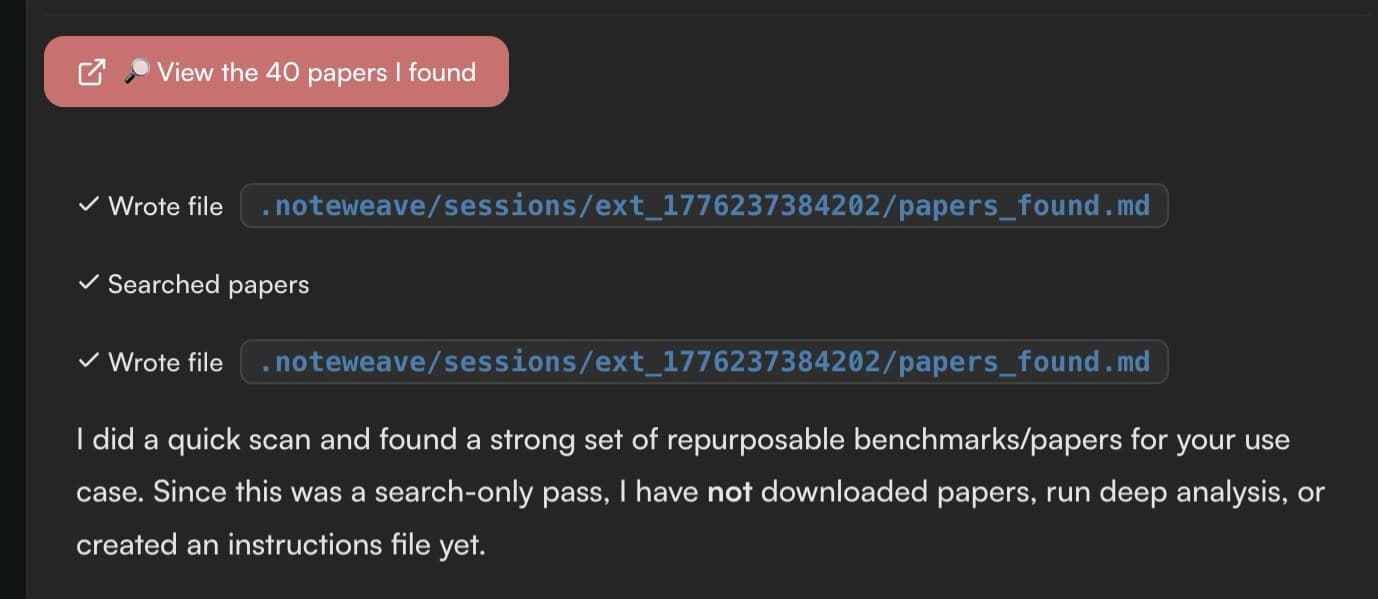
  • Noteweave takes business problem context and uses academic research to propose product improvements
  • Three ex-founders with specialisation in research, engineering, and UI/UX

First 10 minutes

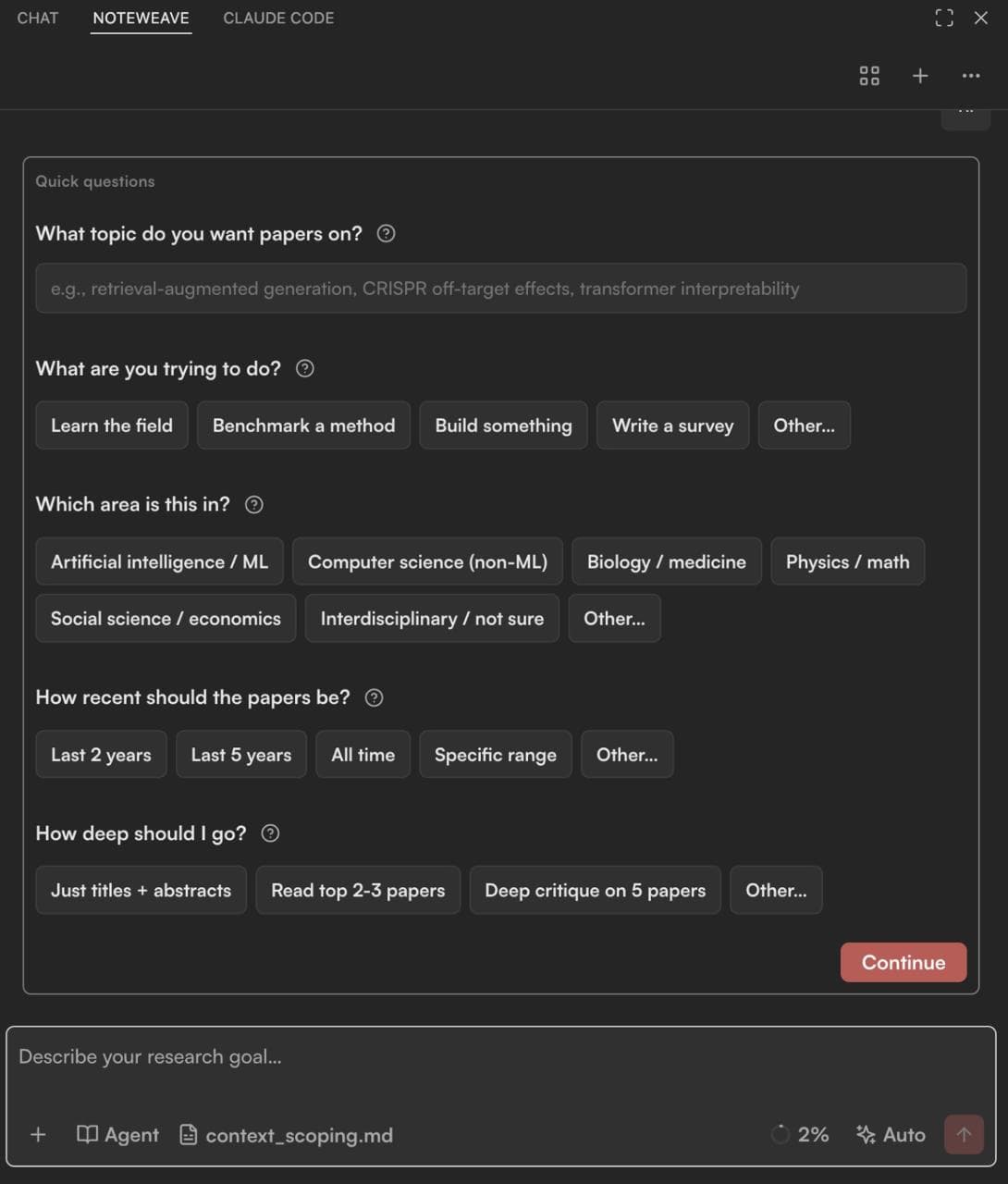
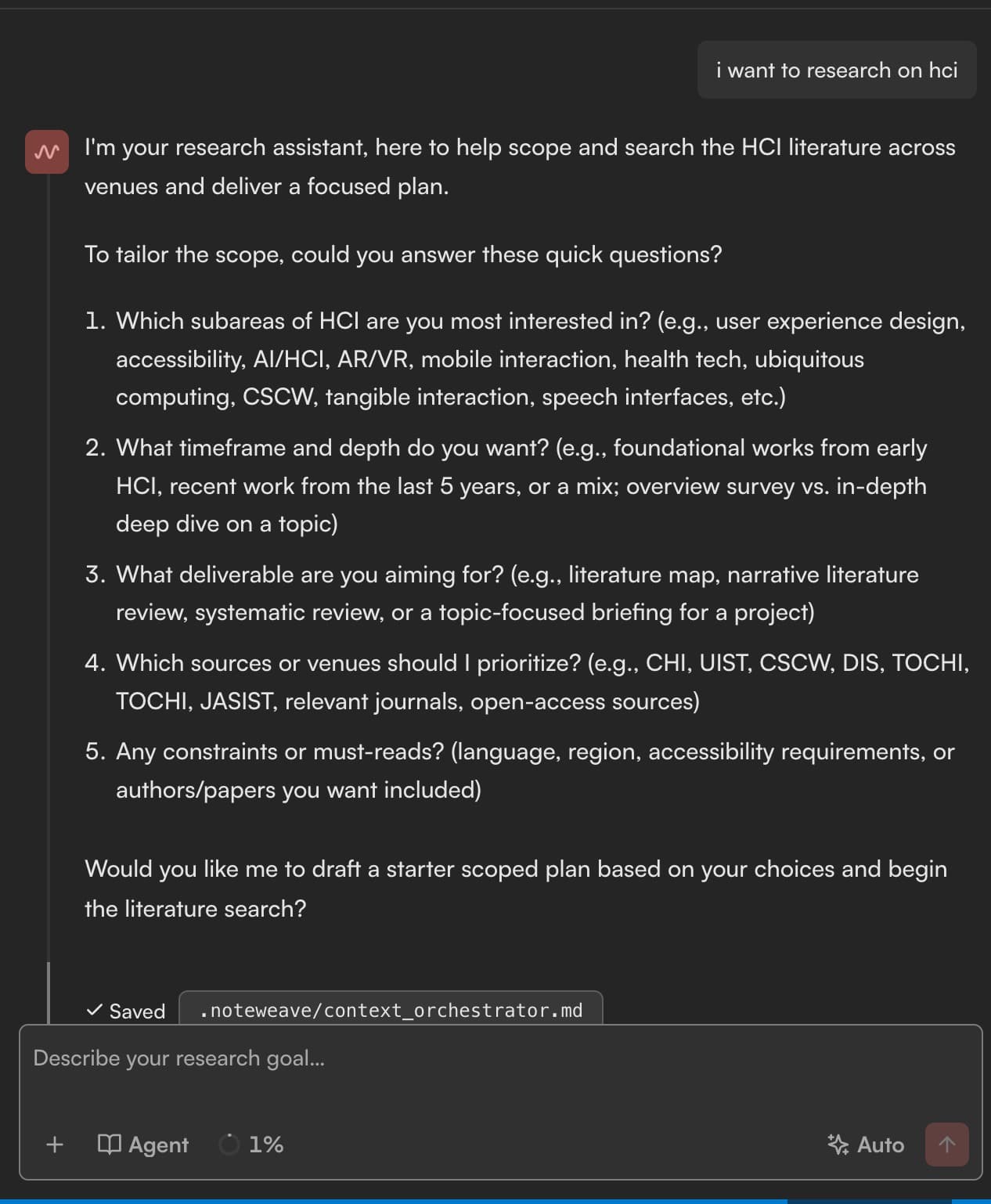
The first session must deliver one moment of value — no onboarding wizard, just a single prompt: What are you working on?

MinuteWhat happensSuccess signal
0–1Clean project creation — one promptProject created
1–3User pastes a paper or describes a problem; Weave confirms understandingContext accepted
3–6Weave surfaces a structured hypothesisHypothesis approved
6–10First experiment runs or hypothesis is refined in detailExperiment initiated
Activation design — low friction to first hypothesis

UI/UX — extension & webapp

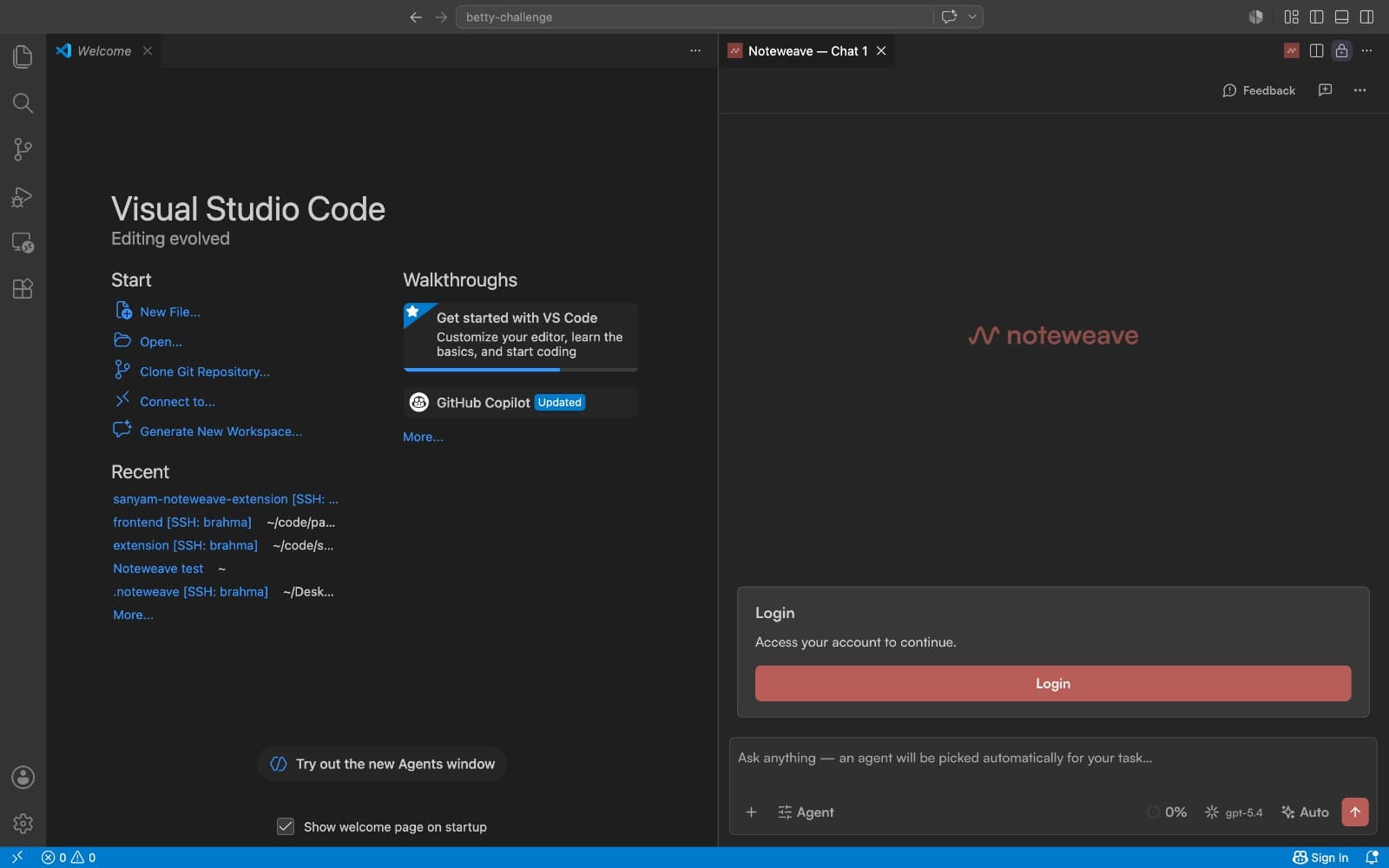
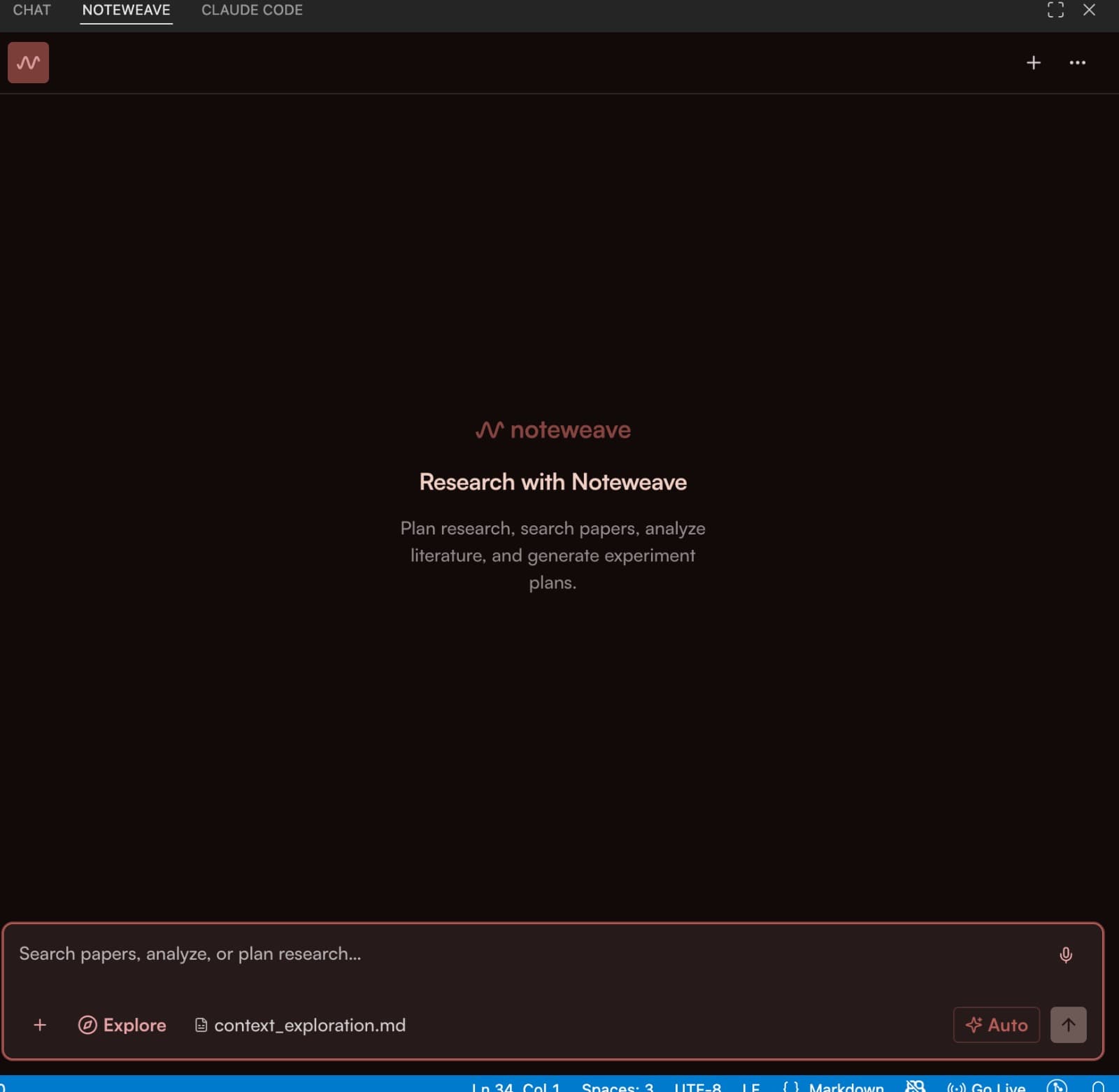
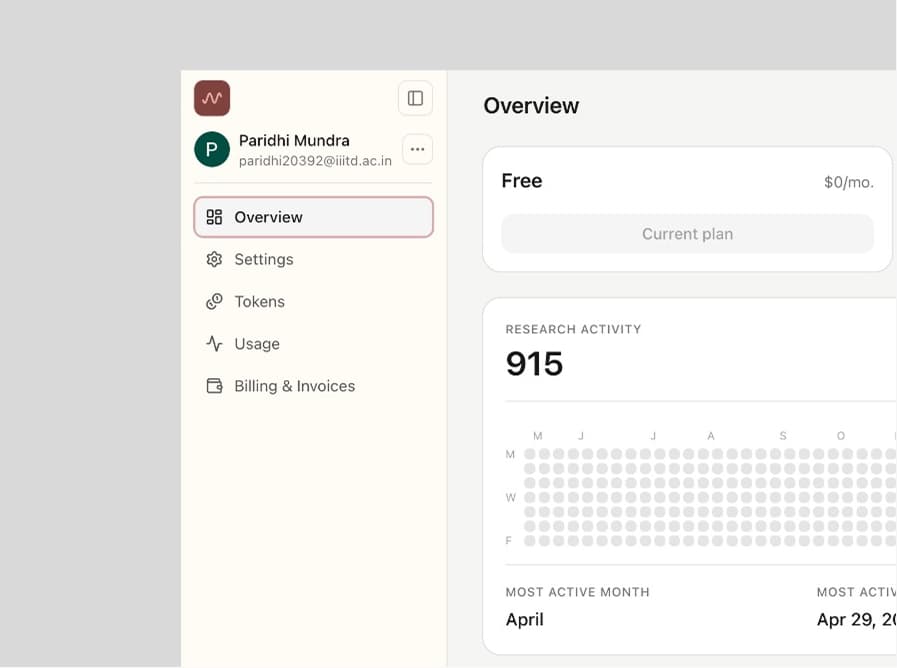
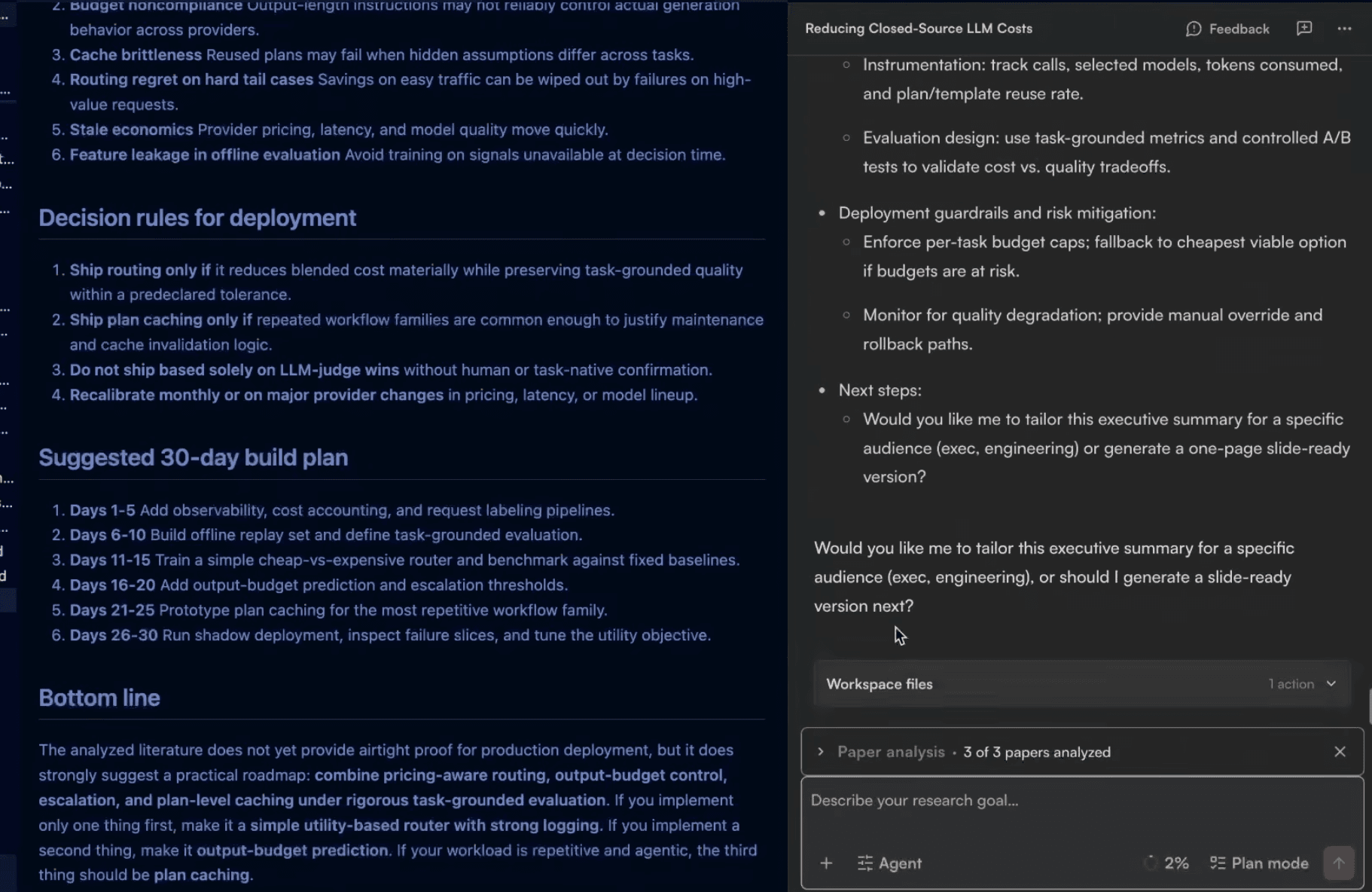
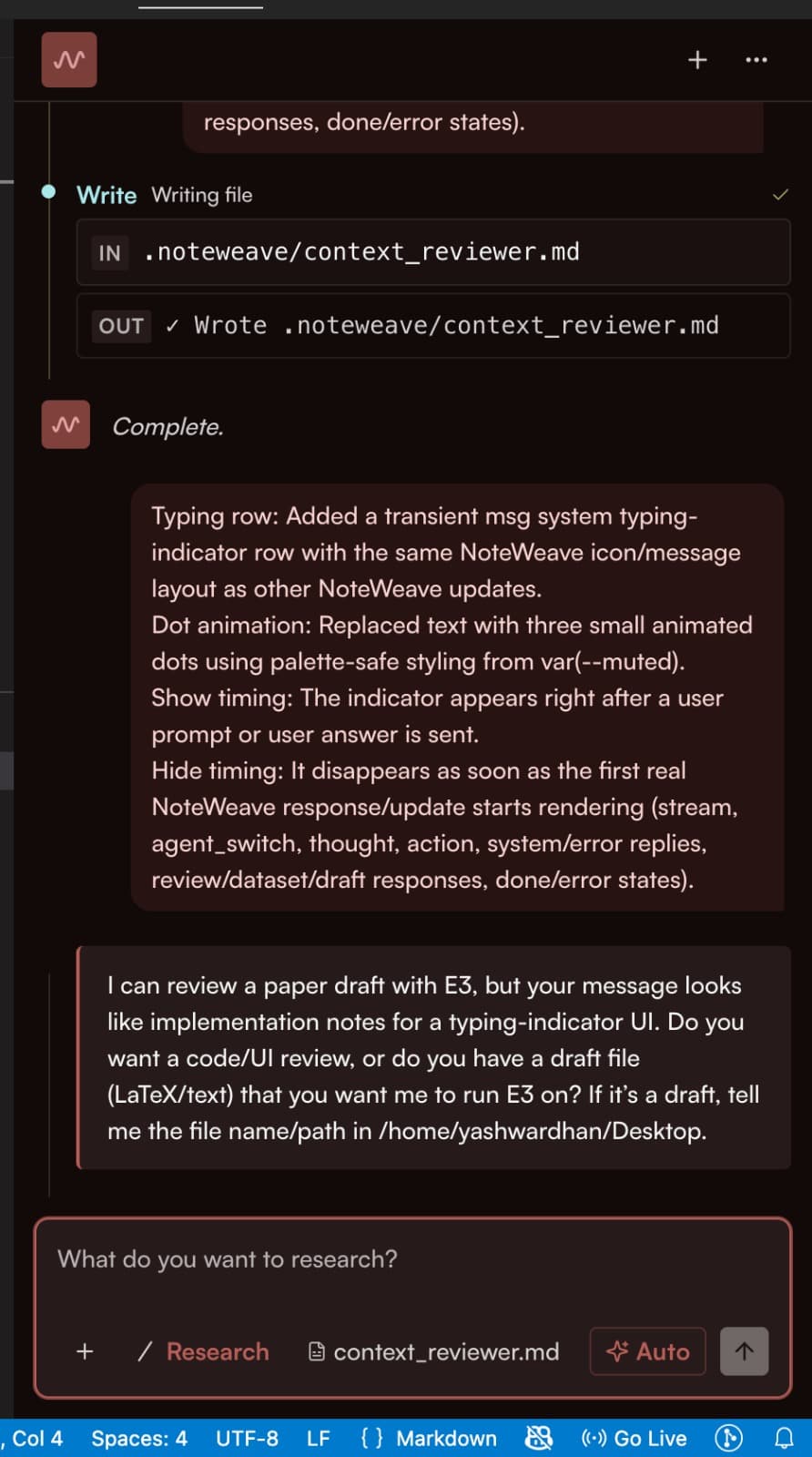
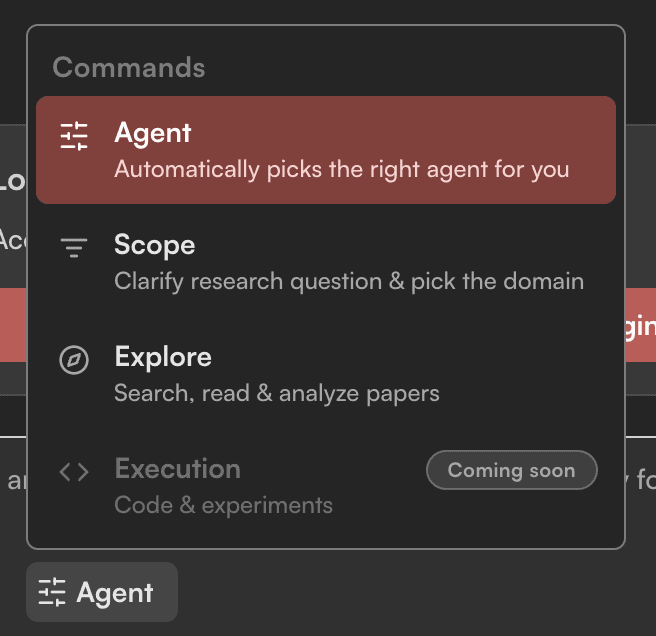
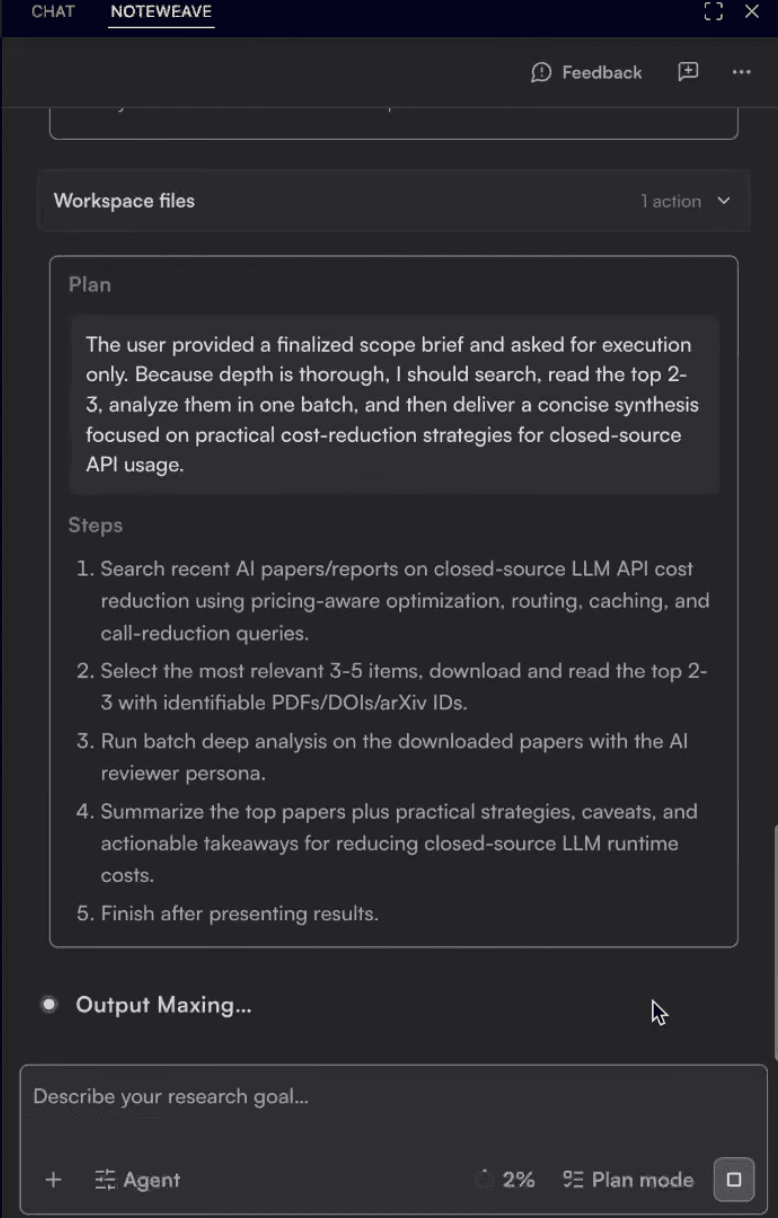
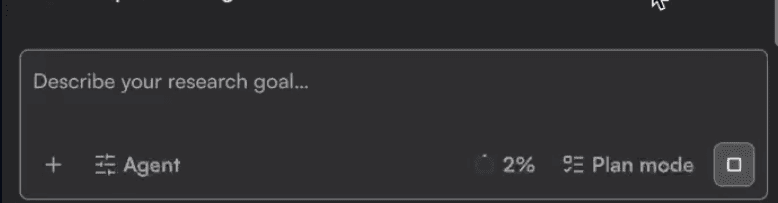
I led a structured UI/UX audit and revamp across the VS Code extension, webapp, and marketing site — fixing chat behaviour, onboarding, permissions, and visual systems.

Extension chat UX

Smooth auto-scroll, clickable links, fixed numbering (1, 2, 3…), and line breaks after e.g.

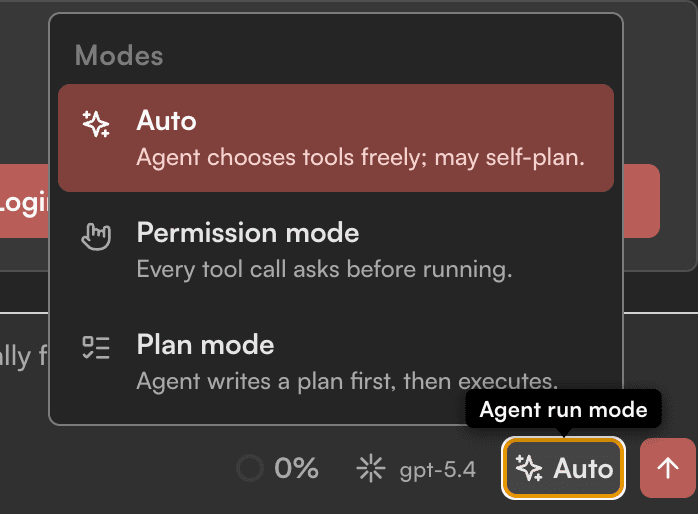
Blend mode

Renamed Auto → Blend Mode as default; mode-switching no longer drops answers mid-chat

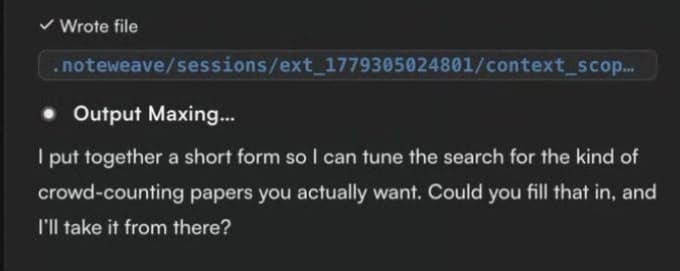
Waiting states

Added personality — Output Maxing…, Aura Farming…, Rizzing… — with fade instead of abrupt swaps

Onboarding & install

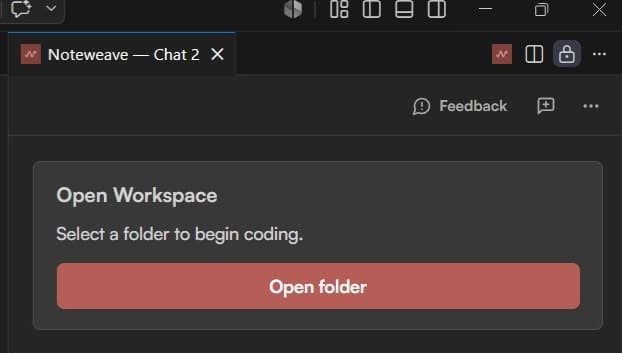
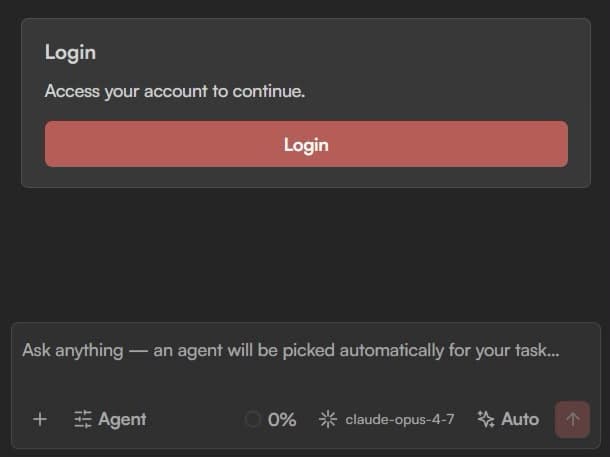
Download CTA moved above plans; workspace-first gating — no chat until a folder is open

  1. Full light-mode UI revamp across extension and webapp
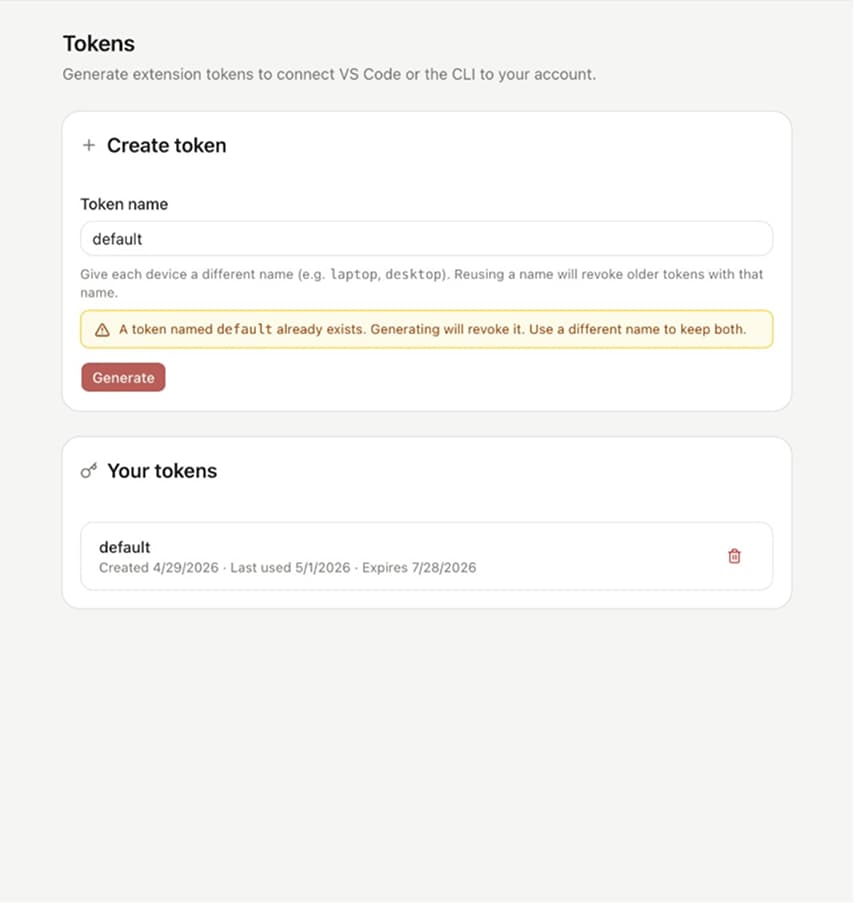
  2. Token creation split into separate boxes; auto-delete stale tokens
  3. Permissions overlay condensed to one-line asks with waiting state
  4. Paper analysis panel — close button, direct-open on progress bar, 95% max display
  5. Footer & CTA routes to apps.noteweave.io auth; Slack → Discord
  6. Welcome greetings with first name; increased question font size by 4px
  7. File-type icons, hover overlays, and Pro / Pro+ tier labelling
Extension overview — install flow and download placement
Light mode revamp — chat, permissions, and analysis panels
Webapp — separated token creation and management flows

Defensibility

R&D as a moat

State-of-the-art ML models powering Weave's reasoning — continuously improved as frontier models scale.

Litigation as a moat

Automated, immutable IP log trail — defensible legal and institutional record of discovery.

Memory lock-in

Research memory accumulates value over time — leaving means losing continuity.

Learnings & impact

Skepticism is the product

Users trust Weave when it flags unreliable research upfront — not when it generates more.

Design for the full loop

Optimising chat alone misses the value — the timeline, IP log, and export artifacts create retention.

Ship UX fixes in public

A structured audit with Discord feedback turned dozens of small bugs into a cohesive UI system.

Paridhi was my Co-founder in 2 startups, which we scaled to users from 30+ countries. She has phenomenal grit and thinking. You are at a loss if you do not have her in your team!
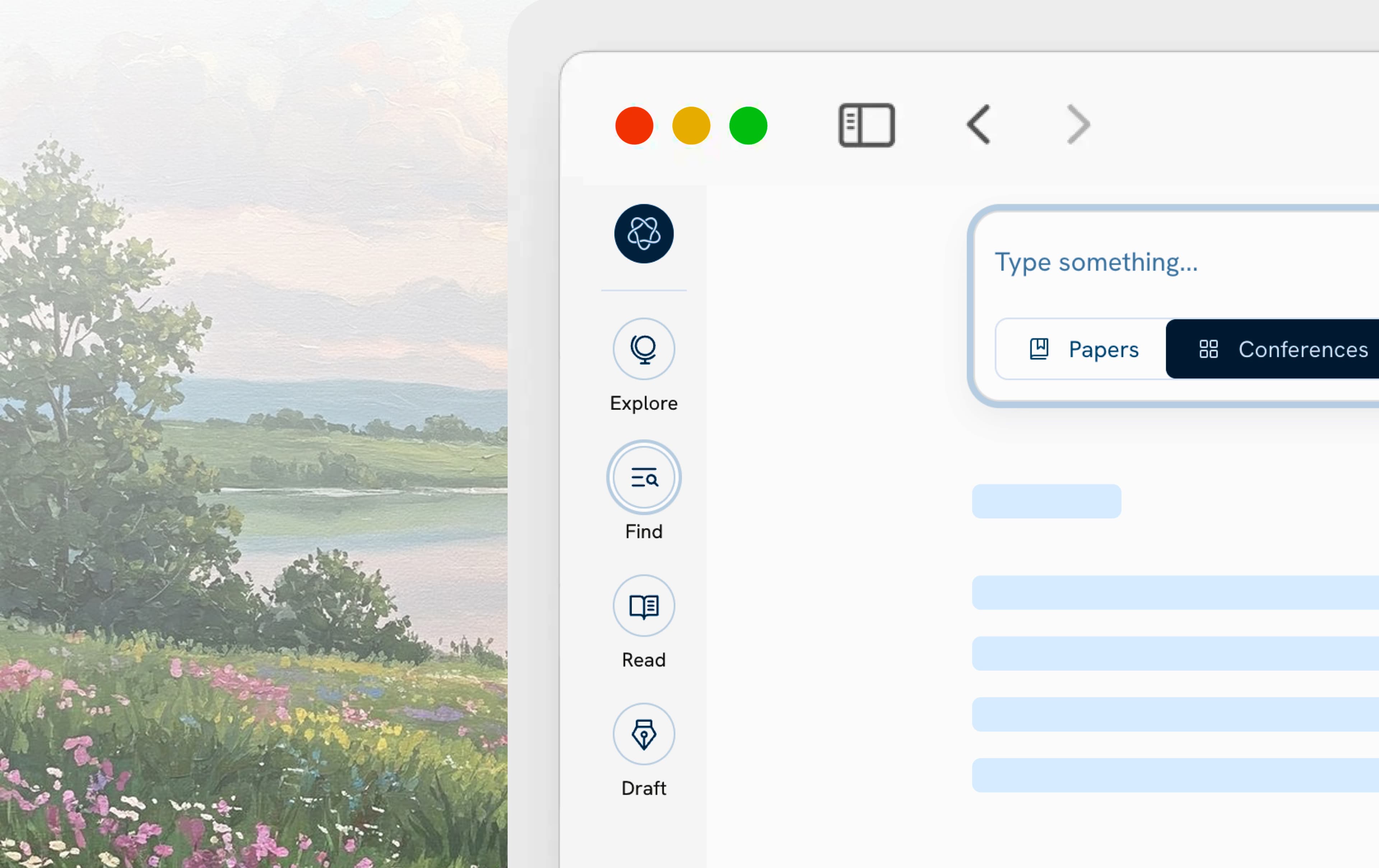
Yashwardhan Chaudhuri · CEO, Noteweave

Ready for next?